What's the output?
class Counter {
  constructor() {
    this.count = 0;
  }

  increment() {
    this.count++;
  }
}

const counterOne = new Counter();
counterOne.increment();
counterOne.increment();

const counterTwo = counterOne;
counterTwo.increment();

console.log(counterOne.count);You missed this one before
counterOne is an instance of the Counter class. The counter class contains a count property on its constructor, and an increment method. First, we invoked the increment method twice by calling counterOne.increment(). Currently, counterOne.count is 2.
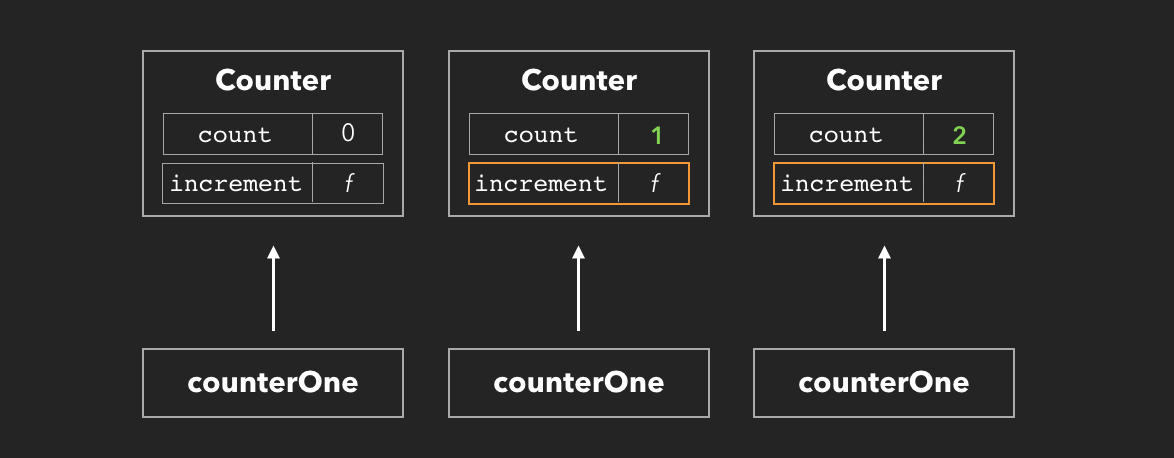
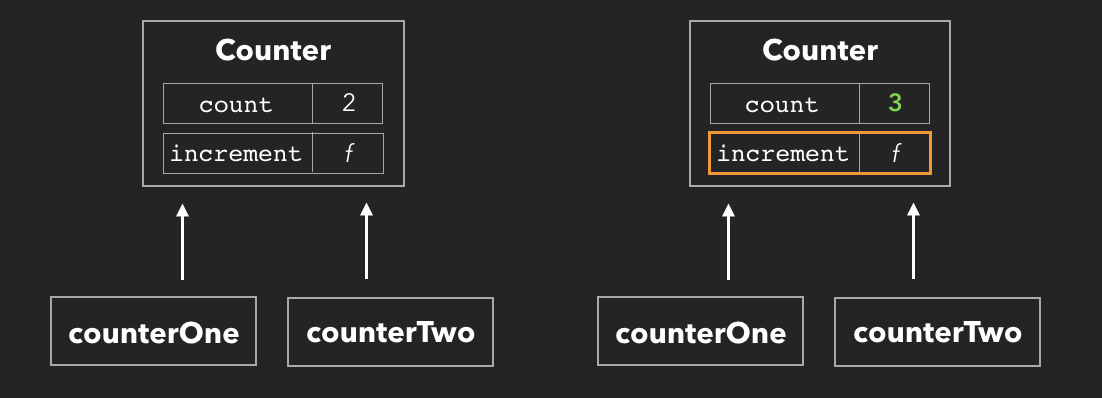
Then, we create a new variable counterTwo, and set it equal to counterOne. Since objects interact by reference, we're just creating a new reference to the same spot in memory that counterOne points to. Since it has the same spot in memory, any changes made to the object that counterTwo has a reference to, also apply to counterOne. Currently, counterTwo.count is 2.
We invoke counterTwo.increment(), which sets count to 3. Then, we log the count on counterOne, which logs 3.
Question 132 · see the original (opens in a new tab)